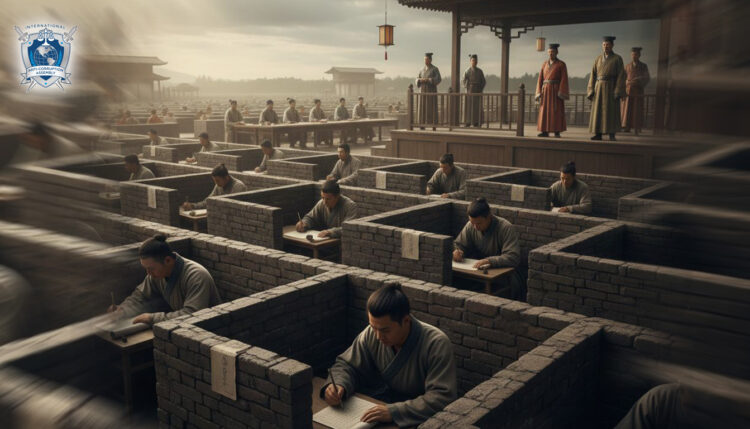
How China Invented the Social Elevator Against Nepotism
When power is passed by birthright or through connections, a state is doomed to degrade. In the 7th century (Tang Dynasty), China introduced the “Keju” system—the world’s first open civil service examinations.
The Problem: Clan Power
For centuries, positions in China were held by representatives of aristocratic families. This bred nepotism, where clan loyalty stood above professionalism. State resources were looted within family networks.
The Solution: Three-Stage Selection
The Keju system fundamentally changed the rules. To become a government official (Mandarin), one had to pass examinations:
Meritocracy: Any talented peasant could rise to the top of power if they knew classical texts and law better than an aristocrat’s son.
Anonymity: Examination papers were recopied by special scribes so that the examiner would not recognize the candidate’s handwriting. Names were sealed.
Isolation: Candidates were locked in individual cells for several days to eliminate any contact with the outside world or the possibility of receiving help.
Consequences: The Golden Age of Bureaucracy
China created the most professional administrative apparatus of that time. Nepotism was severely restricted, as a position could not be bought or inherited — it had to be earned through intellect.
Genesis Conclusion:
The Keju experience teaches us: the best weapon against nepotism is transparent and equal access to positions. When a professional exam becomes the only entrance to power, corrupt connections lose their strength.