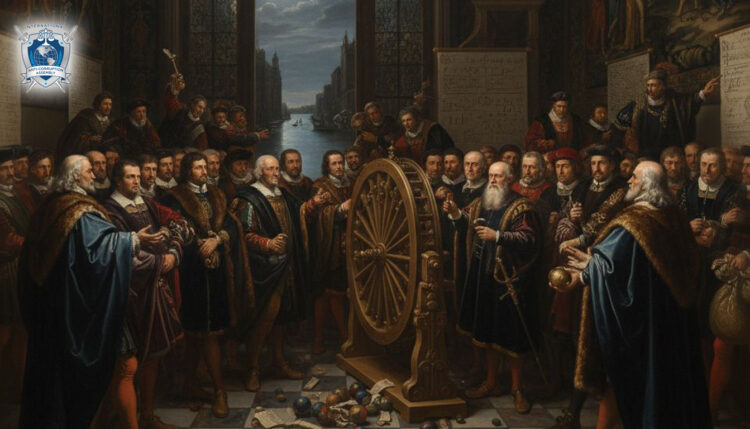
The Republic of Venice lasted for over 1,000 years. Its stability was built on a unique system for electing its ruler (the Doge), which made voter bribery and clan conspiracies impossible.
The Problem: Oligarchic Wars
In medieval city-states, power was usually seized by the wealthiest clan, leading to tyranny and the looting of the treasury. Venice, founded by merchants, understood that one clan’s corruption meant losses for everyone else.
The Solution: Multistage Chaos (The 1268 Algorithm)
To elect the Doge, Venetians devised an incredibly complex procedure combining lots (chance) and voting:
Lots Against Bribery: 30 people were drawn from the Great Council. Through lots, they were reduced to 9. These 9 elected the next 40… and so on for 10 consecutive stages.
Impossible to Bribe: No one knew in advance who would be on the next commission. Even the wealthiest oligarch couldn’t bribe people whose names became known only minutes before the vote.
The Final Ballot: A college of 41 people elected the Doge via secret ballot using colored balls.
Consequences: The Republic Above All
This system of “checks and balances” forced the elites to negotiate rather than go to war. Corruption was minimized because no single family could guarantee the loyalty of randomly selected voters.
Genesis Conclusion:
The Venetian experience teaches: corruption fears randomness and complexity. When an election system becomes mathematically unpredictable, investing in bribery becomes pointless. Procedure is the best defense against oligarchy.