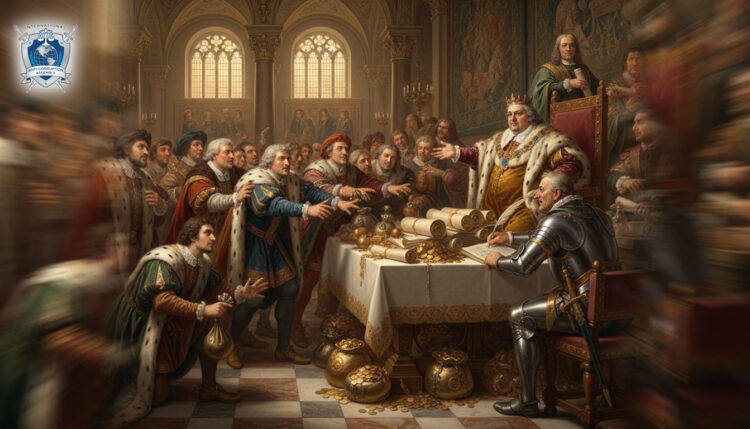
In the Middle Ages and the Renaissance, Europe faced a form of corruption that was entirely legal yet devastating for the state: the sale of state and church offices (venality of offices).
The Scheme: Buy an Office – Recoup the Investment
Kings, constantly in need of money for wars, began to officially sell seats for judges, customs officers, and tax collectors. A merchant or nobleman would buy a position for a vast sum, viewing it as a business investment.
Sinecure: Positions appeared that required no actual work (“sinecure” — from Latin sine cura, without care) but provided a steady income from the treasury.
The Corruption Tax: Since the official paid their own money for the office, they felt entitled to “recoup” it through bribes, extortions, and inflated duties.
Heredity: Offices began to be passed down through generations, creating a closed caste of corrupt administrators.
Consequences: Justice as a Commodity
Justice in the courts became accessible only to those who could outpay an official who had “bought” their own right to judge. This led to the decline of state institutions and popular uprisings.
Genesis Conclusion:
The history of sinecure teaches us: when an office becomes a commodity, justice becomes a service only for the wealthy. A state that trades in power inevitably loses professionalism and turns into a marketplace of abuse.